

B2C Courier Tracking in India
The B2C (Business-to-Consumer) e-commerce market in India has transformed how millions of customers shop, creating an unprecedented demand for reliable courier tracking systems. With over 8 billion shipments delivered annually across India, real-time parcel tracking has evolved from a luxury feature to an absolute necessity for both customers and businesses.
What is B2C Courier Tracking?
B2C courier tracking refers to the system that allows end consumers to monitor their package journey from the seller’s warehouse to their doorstep. Unlike B2B shipments that move between businesses in bulk, B2C parcels are individual orders delivered directly to residential addresses across India’s diverse geography—from metro cities to tier-3 towns and rural areas.
The tracking system assigns a unique identification number (AWB – Air Waybill number) to each shipment, enabling customers to access real-time updates on their package location, estimated delivery time, and any delays or exceptions in transit.
Also Track: B4 Courier Tracking
How B2C Courier Tracking Works in India Also Track:
The courier tracking process involves multiple touchpoints across the delivery network:
Step 1: Order Placement and AWB Generation When a customer places an order, the e-commerce platform or seller generates a shipping label with a unique tracking number through their integrated courier partner’s system.
Step 2: First Mile Pickup The courier company picks up the package from the seller’s warehouse or fulfillment center. The tracking system registers the first scan, marking the shipment as “Picked Up” or “In Transit to Hub.”
Step 3: Hub-to-Hub Movement Packages move through sorting facilities and distribution centers. Each scan at these hubs updates the tracking status, showing the package’s progression through the logistics network.
Step 4: Out for Delivery Once the package reaches the destination city’s delivery hub, it’s assigned to a delivery executive. The status changes to “Out for Delivery.”
Step 5: Final Delivery Upon successful delivery, the system captures proof of delivery—either through digital signature, OTP verification, or photograph—and marks the shipment as “Delivered.”
Major B2C Courier Services in India
India’s courier landscape features both national players and regional specialists serving the B2C segment:
| Courier Service | Coverage | Tracking Features | Delivery Timeframe |
|---|---|---|---|
| Blue Dart | 35,000+ locations | Real-time GPS tracking, SMS alerts | 1-4 days |
| Delhivery | 18,000+ pin codes | AI-powered ETAs, app notifications | 2-7 days |
| Ecom Express | 27,000+ pin codes | Multi-language support, WhatsApp updates | 2-5 days |
| DTDC | 15,000+ locations | Email alerts, delivery slots | 2-6 days |
| Xpressbees | 2,500+ cities | Live location sharing | 2-5 days |
| Shadowfax | 700+ cities | Hyperlocal tracking | Same-day to 3 days |
| India Post | 155,000+ post offices | Basic tracking, COD available | 3-10 days |
| Ekart Logistics | Pan-India | Integrated Flipkart tracking | 2-7 days |
Key Features of Modern B2C Courier Tracking Systems

Real-Time Status Updates Advanced tracking platforms provide minute-by-minute updates as packages move through the delivery network, eliminating the anxiety of waiting without information.
Predictive Delivery Windows Machine learning algorithms analyze historical delivery data, current traffic conditions, and delivery executive locations to provide accurate estimated delivery times, often narrowed down to specific hour slots.
Multi-Channel Notifications Customers receive tracking updates through SMS, email, WhatsApp, push notifications, and in-app alerts based on their preferences.
Exception Management When issues arise—such as incorrect addresses, customer unavailability, or weather disruptions—the tracking system immediately flags these exceptions and provides resolution options.
Delivery Preferences Modern systems allow customers to reschedule deliveries, change delivery addresses, provide specific instructions, or request contactless delivery directly through the tracking interface.
Proof of Delivery Digital records including timestamps, GPS coordinates, recipient signatures, and delivery photographs provide complete transparency and accountability.
Benefits of Courier Tracking for Indian E-commerce Customers
Transparency and Peace of Mind Knowing exactly where your package is eliminates uncertainty and reduces the need to contact customer service for status updates.
Delivery Planning Accurate ETAs help customers plan their day around expected deliveries, reducing failed delivery attempts due to customer unavailability.
Security Against Fraud Real-time tracking helps customers identify potential theft or misdelivery issues quickly, enabling faster resolution and claims.
Better Shopping Decisions Tracking history helps customers evaluate courier reliability when choosing between sellers offering the same product with different shipping options.
Time Savings Self-service tracking eliminates hours spent on customer service calls or chats to check order status.
Benefits for E-commerce Businesses and Sellers
Reduced Customer Service Load When customers can track their own packages, support teams handle fewer “Where is my order?” inquiries, reducing operational costs significantly.
Improved Customer Satisfaction Transparency in delivery processes leads to higher customer satisfaction scores and better reviews, directly impacting repeat purchase rates.
Better Logistics Partner Evaluation Tracking data provides concrete metrics to assess courier performance, helping businesses choose the most reliable shipping partners for different regions.
Reduced RTO (Return to Origin) Rates Proactive communication about delivery attempts and exceptions helps resolve issues before packages are returned, saving reverse logistics costs.
Data-Driven Decision Making Aggregate tracking data reveals patterns in delivery performance across pin codes, helping optimize inventory placement and shipping strategies.
Common Tracking Status Meanings in India
Understanding tracking status updates helps set realistic delivery expectations:
| Status | Meaning | Expected Next Step |
|---|---|---|
| Order Confirmed | Seller received order | Package pickup scheduled |
| Picked Up | Courier collected package | Movement to origin hub |
| In Transit | Moving between facilities | Arrival at destination city |
| Reached Destination Hub | Arrived in delivery city | Out for delivery assignment |
| Out for Delivery | With delivery executive | Delivery attempt today |
| Delivery Attempted | Customer unavailable | Reattempt scheduled |
| Delivered | Successfully handed over | Process complete |
| RTO Initiated | Return to seller started | Refund processing begins |
| Held at Customs | Awaiting clearance (international) | Documentation review |
| Exception | Issue flagged | Customer/seller action needed |
How to Track B2C Courier Shipments in India
Method 1: Courier Company Website Visit the official tracking page of your courier service provider, enter your AWB number, and view detailed shipment information.
Method 2: E-commerce Platform Most marketplaces like Amazon, Flipkart, and Myntra provide integrated tracking within your order details page, aggregating information from multiple courier partners.
Method 3: Universal Tracking Tools Third-party tracking platforms allow you to track multiple shipments from different courier companies in one place by simply entering tracking numbers.
Method 4: Mobile Apps Courier companies offer dedicated apps with enhanced features like push notifications, live GPS tracking, and direct communication with delivery executives.
Method 5: SMS and Email Links Tracking updates sent via SMS or email typically include direct links to detailed tracking pages.
Challenges in B2C Courier Tracking in India

Address Standardization Issues India’s complex addressing system—with inconsistent pin codes, missing landmarks, and duplicate street names—creates tracking complications when packages cannot be accurately located.
Last-Mile Connectivity Remote areas often lack GPS infrastructure and reliable network connectivity, making real-time tracking difficult in tier-3 cities and rural locations.
Multiple Handoffs When couriers partner with local delivery agents for last-mile delivery, tracking updates may become irregular during handoff transitions.
System Integration Gaps Smaller courier companies may have outdated tracking systems that don’t update frequently or provide limited information.
Customer Availability Failed delivery attempts due to customer unavailability aren’t always accurately reflected in tracking systems, leading to confusion.
Best Practices for Using Courier Tracking Effectively
Save Your Tracking Numbers Keep AWB numbers readily accessible in a dedicated folder or note for quick reference across all your shipments.
Enable All Notification Channels Activate SMS, email, and app notifications to receive updates through multiple channels, ensuring you never miss important delivery information.
Check Tracking Before Delivery Windows Monitor your shipment status during the expected delivery timeframe to ensure you’re available when the delivery executive arrives.
Update Contact Information Ensure your phone number and address details are correct and up-to-date to avoid delivery failures.
Act Quickly on Exceptions When tracking shows exceptions or delivery issues, respond immediately through the provided channels to prevent RTO scenarios.
Provide Delivery Instructions Use tracking portals to add specific instructions about your location, gate codes, or preferred delivery spots to facilitate smooth delivery.
The Technology Behind B2C Tracking Systems
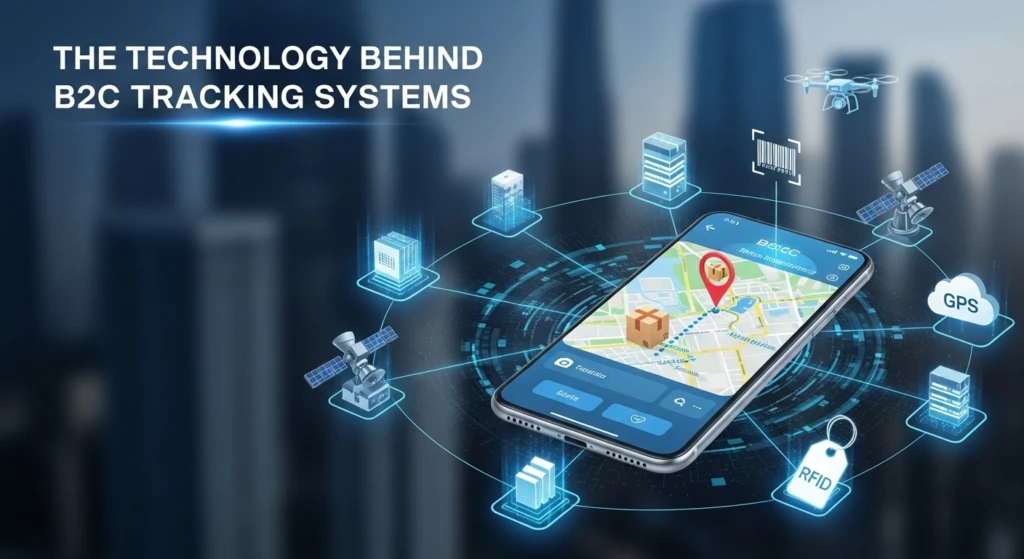
GPS and IoT Integration Modern courier vehicles and delivery executives use GPS-enabled devices that transmit real-time location data, creating accurate tracking trails.
Barcode and QR Scanning Each package scan at various touchpoints automatically updates the central tracking system, creating an audit trail of the shipment’s journey.
Artificial Intelligence and Machine Learning AI algorithms predict delivery times by analyzing millions of historical deliveries, current traffic patterns, weather conditions, and delivery executive performance.
API Integration E-commerce platforms integrate with courier APIs to pull tracking data directly into customer accounts, creating seamless tracking experiences.
Cloud Infrastructure Cloud-based tracking systems handle millions of simultaneous tracking queries during peak shopping seasons without performance degradation.
Future of B2C Courier Tracking in India
Hyperlocal Precision Next-generation tracking will provide real-time delivery executive location on maps, showing customers exactly how far their package is and when it will arrive.
Voice-Activated Tracking Integration with voice assistants will allow customers to check tracking status through simple voice commands in multiple Indian languages.
Blockchain for Transparency Blockchain technology may create immutable tracking records, further enhancing trust and reducing disputes over delivery status.
Drone Delivery Tracking As drone deliveries become viable in India, tracking systems will evolve to show three-dimensional flight paths and real-time aerial locations.
Augmented Reality Navigation AR-powered apps may help delivery executives find exact delivery locations in complex residential areas, improving first-attempt delivery success.
Choosing the Right Tracking Tool
For customers managing multiple orders from different platforms, dedicated courier tracking tools offer significant advantages. These platforms aggregate tracking information from various courier services into a single dashboard, eliminating the need to visit multiple websites or remember different tracking number formats.
Look for tracking tools that support major Indian courier services, provide real-time updates, send proactive notifications, and maintain tracking history for future reference. The best platforms offer clean interfaces, mobile apps, and no registration requirements for quick status checks.
Frequently Asked Questions About B2C Courier Tracking
Q1: How long does it take for tracking information to appear after ordering?
Tracking information typically appears within 6-24 hours after order placement. The seller needs time to process the order, generate the AWB number, and hand over the package to the courier service. Once the courier completes the first scan at pickup, the tracking status becomes active. If tracking information doesn’t appear within 48 hours, contact the seller to confirm dispatch.
Q2: Why hasn’t my tracking status updated for several days?
Tracking status may remain static for several reasons: the package is in transit between major hubs without intermediate scanning points, network connectivity issues at sorting facilities prevent scan uploads, holidays or weekends slow down operations, or the shipment is held for customs clearance (for international orders). If status remains unchanged for more than 3 business days, contact the courier company directly with your AWB number for investigation.
Q3: Can I change the delivery address after shipment is dispatched?
Address changes after dispatch are possible but depend on the courier service and shipment location. If the package hasn’t reached the destination city, most couriers allow address modification through their customer service. Once marked “Out for Delivery,” address changes become difficult. Contact courier customer support immediately with your tracking number to request address changes. Some modern tracking platforms offer self-service address modification features before final delivery.
Q4: What should I do if tracking shows delivered but I didn’t receive the package?
First, check with family members or neighbors who might have received it on your behalf. Verify if the package was left at a safe location as per delivery instructions. Check the proof of delivery in your tracking details—many couriers now upload delivery photographs.
Q5: Why do different tracking systems show different information for the same AWB number?
Tracking information discrepancies occur because different platforms update at different intervals. The courier company’s official website typically has the most current information as it connects directly to their operational database.