

CMA CGM Container Tracking
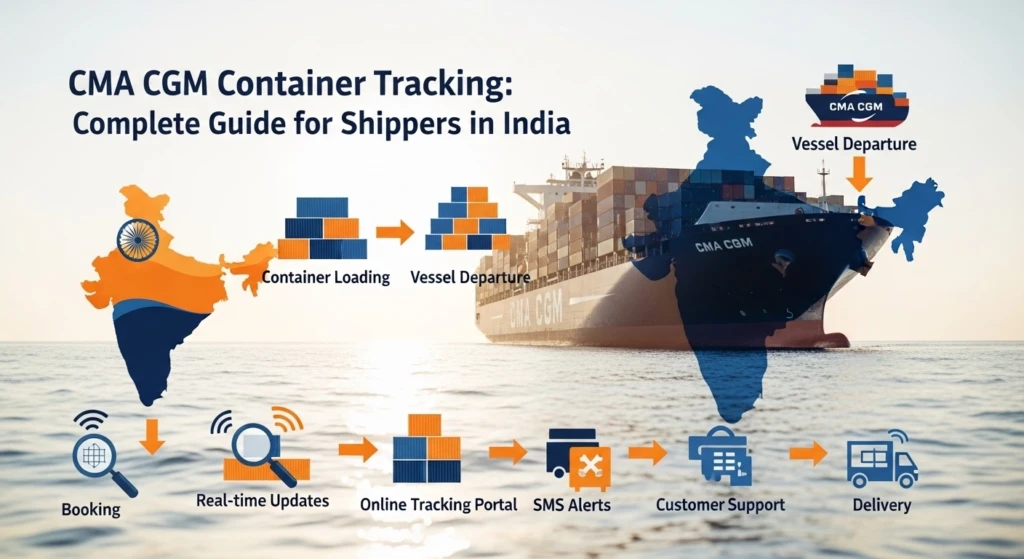
CMA CGM, the world’s third-largest container shipping company, handles millions of containers annually through Indian ports including Mumbai, Chennai, Nhava Sheva, and Tuticorin. For Indian shippers, exporters, and importers, tracking CMA CGM containers accurately is essential for supply chain efficiency and timely cargo delivery.
Understanding CMA CGM Container Tracking System
CMA CGM provides a comprehensive digital tracking system that allows shippers to monitor their cargo in real-time from origin to destination. The tracking system updates container status at each milestone, including vessel departure, transit through multiple ports, customs clearance, and final delivery.
Key Tracking Identifiers
To track your CMA CGM shipment, you need one of these identifiers:
Also Track: Con-way Freight Tracking
| Tracking ID Type | Format | Example | Use Case |
|---|---|---|---|
| Container Number | 4 letters + 7 digits | CMAU1234567 | Standard container tracking |
| Bill of Lading (B/L) | Alphanumeric | INBOM123456 | Complete shipment details |
| Booking Reference | Alphanumeric | BKG987654321 | Pre-shipment tracking |
| Booking Confirmation | Numbers | 123456789 | Early stage tracking |
How to Track CMA CGM Containers
Method 1: Official CMA CGM Website
- Visit the CMA CGM official website
- Navigate to the “Track & Trace” section
- Enter your container number, B/L number, or booking reference
- Click “Track” to view real-time status
- Access detailed milestone information and estimated arrival times
Method 2: CMA CGM Mobile Application
CMA CGM offers a dedicated mobile app for iOS and Android devices:
- Download “CMA CGM+” from App Store or Google Play
- Register with your business email
- Add containers to your watchlist
- Receive push notifications for status updates
- Access documentation and vessel schedules
Method 3: Third-Party Tracking Tools
Indian shippers can use aggregated tracking platforms that consolidate multiple carrier information:
- Enter CMA CGM container number on courier status websites
- View tracking data alongside other shipments
- Compare transit times across different carriers
- Export tracking reports for logistics management
Method 4: EDI and API Integration
Large-volume shippers in India can integrate CMA CGM tracking directly into their systems:
- Request API access from CMA CGM
- Implement EDI connectivity for automated updates
- Integrate tracking data into warehouse management systems
- Automate customs documentation workflows
CMA CGM Container Status Codes Explained
Understanding status codes helps shippers interpret tracking information accurately:
| Status Code | Meaning | Action Required |
|---|---|---|
| Gate In | Container received at origin port | None – normal process |
| Loaded on Vessel | Container loaded for sea transit | Monitor vessel schedule |
| Departed | Vessel left port | Track vessel movement |
| Transshipment | Container transferred to another vessel | Verify new vessel details |
| Discharged | Container unloaded at destination | Arrange pickup or delivery |
| Gate Out | Container left port premises | Coordinate with transport |
| Empty Return | Container returned empty | Complete cycle |
| Customs Hold | Awaiting customs clearance | Submit required documents |
CMA CGM Services in Major Indian Ports
CMA CGM operates extensive services across Indian maritime infrastructure:
Mumbai (JNPT – Nhava Sheva)
- India’s largest container port handling CMA CGM’s major volume
- Direct services to Europe, Mediterranean, Americas, and Asia
- Average transit time to Europe: 18-25 days
- Weekly vessel calls on multiple service loops
Chennai Port
- Key gateway for South India cargo
- Strong connections to Southeast Asia and Far East
- Automotive and machinery export hub
- Transit time to Singapore: 5-7 days
Tuticorin Port
- Strategic location for transshipment cargo
- Growing containerized cargo volume
- Cost-effective option for South Indian exporters
- Regular feeder services connecting to CMA CGM mainline vessels
Kolkata and Haldia
- Primary ports for Eastern India
- Service to Bangladesh, Myanmar, and Southeast Asia
- Jute, tea, and engineering goods export gateway
- Transit time to Southeast Asia: 7-10 days
Common Tracking Issues and Solutions
Issue 1: Container Number Not Found
Causes:
- Incorrect container number entry
- Container not yet in system (too early)
- Typing errors in check digit
Solutions:
- Verify container number format (4 letters + 7 digits)
- Wait 24-48 hours after booking confirmation
- Double-check the last digit (check digit)
- Contact CMA CGM customer service with B/L number
Issue 2: Tracking Information Not Updating
Causes:
- Container in transit between scanning points
- System synchronization delays
- Vessel schedule changes
Solutions:
- Allow 24-48 hours between port activities
- Check vessel position using vessel tracking tools
- Contact CMA CGM India office for manual update
- Verify with freight forwarder or customs broker
Issue 3: Delayed Customs Clearance
Causes:
- Incomplete documentation
- Examination orders from customs
- Duty payment pending
Solutions:
- Ensure complete and accurate documentation
- Coordinate with customs house agent (CHA)
- Monitor ICEGATE portal for customs status
- Keep duty payment documents ready
Document Requirements for CMA CGM Shipments in India
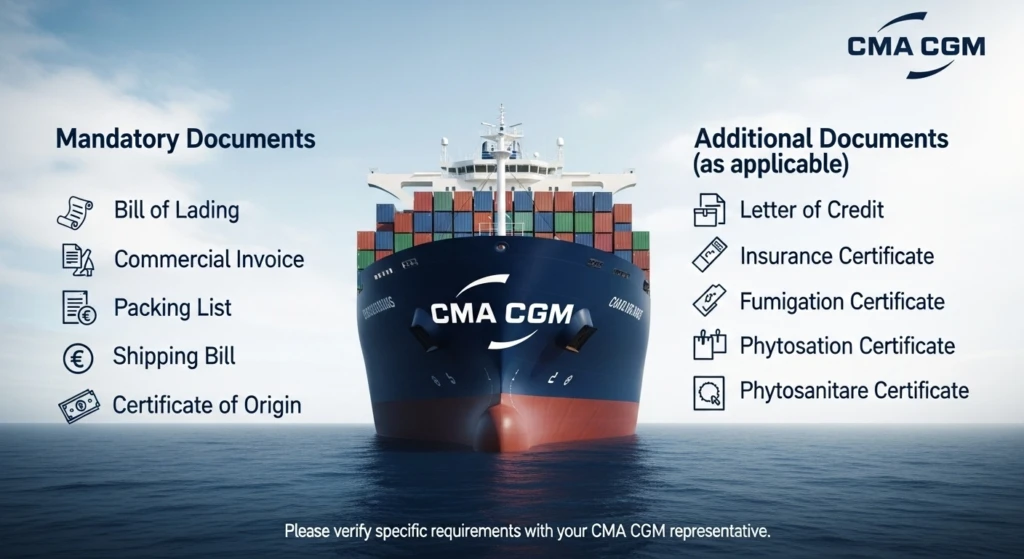
Export Documentation
For Indian exporters shipping via CMA CGM:
- Commercial Invoice – Detailed product description and value
- Packing List – Weight and dimensions of each package
- Shipping Bill – Customs export declaration
- Bill of Lading – Transport contract and title document
- Certificate of Origin – Required for preferential duty claims
- Export License – For restricted goods
- Insurance Certificate – Cargo insurance proof
Import Documentation
For Indian importers receiving CMA CGM containers:
- Bill of Lading (Original) – Required for cargo release
- Commercial Invoice – From supplier
- Packing List – Container contents details
- Bill of Entry – Customs import declaration
- Import License – For restricted items
- SCOMET – For sensitive goods
- Delivery Order – From CMA CGM after document submission
CMA CGM Detention and Demurrage in India
Understanding free time and charges prevents unexpected costs:
Free Time Periods
| Container Type | Free Days (Standard) | After Free Time |
|---|---|---|
| Import Dry Container | 5-7 days | Demurrage charges |
| Import Reefer Container | 3-5 days | Demurrage + power charges |
| Export Container | 5-7 days | Detention charges |
| Transshipment | 3-5 days | Storage charges |
Charge Structure
- Demurrage: Charges for containers remaining at port beyond free time
- Detention: Charges for containers held outside port beyond allowed period
- Per Diem Rates: INR 500-2,000 per day depending on container size and type
- Reefer Charges: Additional INR 800-1,500 per day for power supply
Avoiding Detention/Demurrage
- Complete documentation before container arrival
- Arrange delivery transport in advance
- Ensure customs clearance team is ready
- Monitor container discharge dates closely
- Apply for free time extension if needed (with valid reasons)
CMA CGM Digital Services for Indian Shippers
eBusiness Suite
CMA CGM’s digital platform offers:
- Online Booking: Create and submit bookings 24/7
- Documentation Upload: Submit shipping instructions electronically
- Invoice Management: Access and download invoices
- Payment Gateway: Online freight payment options
- Schedule Management: View and book on available vessel schedules
Blockchain Integration
CMA CGM participates in TradeLens blockchain platform:
- Enhanced supply chain visibility
- Reduced documentation processing time
- Secure document sharing with stakeholders
- Real-time customs information sharing
- Reduced risk of document fraud
Smart Container Technology
CMA CGM deploys smart containers with:
- GPS location tracking
- Temperature monitoring for reefers
- Shock and tilt sensors
- Remote monitoring capabilities
- Alert systems for container integrity
Best Practices for Efficient CMA CGM Container Tracking
For Exporters
- Book Early: Reserve container space 10-14 days before cargo ready date
- Accurate Documentation: Ensure all documents match exactly
- Container Loading: Complete container stuffing 48 hours before cutoff
- Track Proactively: Monitor container from gate-in to final destination
- Communication: Maintain contact with freight forwarder and consignee
For Importers
- Pre-Alert Preparation: Arrange customs clearance before container arrival
- Document Collection: Obtain original B/L promptly
- Delivery Planning: Schedule container pickup within free time
- Payment Readiness: Keep freight and duty payments ready
- Backup Plans: Have alternative delivery arrangements for delays
For Freight Forwarders
- Multiple Container Tracking: Use bulk tracking tools for efficiency
- Client Updates: Provide proactive shipment status updates
- Exception Management: Address tracking anomalies immediately
- Documentation Accuracy: Verify all details before submission
- Relationship Management: Maintain good rapport with CMA CGM staff
CMA CGM Customer Service in India
Contact Information
- Customer Service Hotline: Available during business hours
- Email Support: Dedicated email for Indian operations
- Port Offices: Physical presence at major Indian ports
- Online Support: Chat function on CMA CGM website
- Account Managers: Dedicated contacts for regular shippers
Escalation Process
- First contact: Local port office or customer service
- Second level: Regional manager
- Third level: Country head office
- Documentation: Keep reference numbers for all communications
Integration with Indian Customs Systems
ICEGATE Integration
CMA CGM systems connect with Indian Customs EDI System (ICES):
- Electronic filing of Import General Manifest (IGM)
- Automated Bill of Entry processing
- Reduced manual intervention
- Faster customs clearance
- Real-time status updates on ICEGATE portal
AEO Benefits
Authorized Economic Operator (AEO) certified importers gain:
- Faster container release
- Reduced examination requirements
- Priority processing during peak times
- Lower bank guarantees for deferred duty payment
Cost Optimization Strategies
Reducing Tracking-Related Delays
Delays cost money in demurrage and business interruption:
- Real-Time Monitoring: Check tracking status daily
- Alert Setup: Configure notifications for key milestones
- Document Preparation: Complete paperwork before container arrival
- Backup Documentation: Keep digital copies of all documents
- Professional Help: Engage experienced customs brokers
Volume-Based Advantages
Regular CMA CGM shippers can negotiate:
- Extended free time periods
- Reduced detention/demurrage rates
- Priority equipment allocation
- Dedicated customer service
- Volume-based freight discounts
Future of Container Tracking in India
Emerging Technologies
- IoT Sensors: Real-time temperature, humidity, and location data
- AI Predictions: Estimated arrival time adjustments based on patterns
- Automated Alerts: Proactive notifications for potential delays
- Digital Documentation: Blockchain-based paperless trade
- Port Automation: Faster container processing at Indian ports
Indian Maritime Initiatives
Government programs improving container tracking:
- Sagarmala Project: Port infrastructure modernization
- RFID Implementation: Automated container identification
- PCS Integration: Single-window customs clearance
- Digital India: Paperless trade facilitation
- Ease of Doing Business: Streamlined logistics processes
Frequently Asked Questions
Q1: How long does it take for CMA CGM container tracking information to appear in the system?
Tracking information typically appears within 24-48 hours after booking confirmation. Once the container is gate-in at the origin port, real-time tracking becomes available. If your container number doesn’t show tracking data after 48 hours, verify the number format and contact CMA CGM customer service with your booking reference or Bill of Lading number.
Q2: What should I do if my CMA CGM container is showing “Customs Hold” status in India?
A customs hold indicates your shipment requires additional clearance procedures. Contact your Customs House Agent (CHA) immediately to identify the issue—it could be incomplete documentation, examination orders, or pending duty payment. Check the ICEGATE portal for specific customs notifications, ensure all required documents are submitted, and coordinate with your CHA to resolve the hold quickly to avoid demurrage charges.
Q3: Can I track multiple CMA CGM containers simultaneously from India?
Yes, CMA CGM’s eBusiness platform allows bulk tracking of multiple containers. You can add up to 50 container numbers at once. Alternatively, third-party courier status tracking tools aggregate multiple shipments across different carriers, providing a consolidated view. For high-volume shippers, API integration enables automatic tracking of all containers directly in your warehouse management system.
Q4: What is the difference between CMA CGM’s container number and Bill of Lading number for tracking?
The container number (11 characters: 4 letters + 7 digits) identifies the physical container and tracks its movement globally. The Bill of Lading (B/L) number identifies your specific shipment and provides comprehensive cargo details including shipper, consignee, commodity, and commercial terms. For basic location tracking, use the container number; for complete shipment information including documentation status, use the B/L number.
Q5: How can I reduce demurrage charges on CMA CGM containers arriving at Indian ports?
Start customs clearance procedures before container arrival by having your CHA file the Bill of Entry with estimated arrival details. Ensure original Bill of Lading is received promptly from your supplier or bank. Complete duty payment immediately upon assessment. Arrange delivery transport in advance and schedule pickup within the free time period (typically 5-7 days). For unavoidable delays, apply for free time extension with supporting documents before the free period expires.